HumAIne seeks to empower human operators in Human-AI advanced decision-making applications in dynamic and unstructured environments.
AI Paradigms
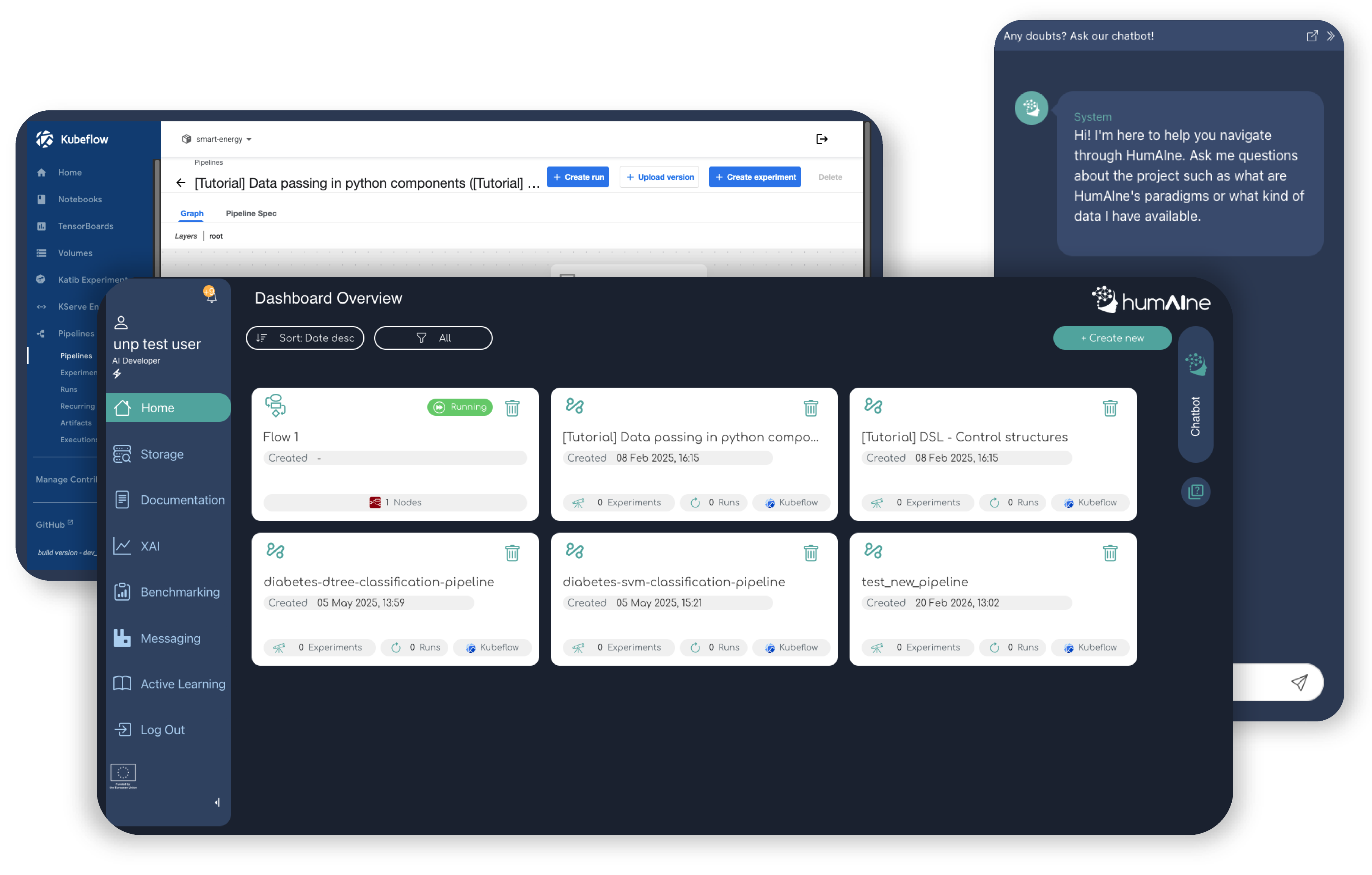
HumAIne enables the creation of event-driven AI Workflows, supporting integration with external tools to enhance them. The platform's RBAC (Role-based Access Control) enables different functionalities per role, ensuring individuals have the right tools and information accessible to them at any time.
Active Learning
Fosters collaborative synergy through a networked swarm of AI agents, elevating collective intelligence for optimal system efficiency.
HumAL: HumAIne Active Learning Platform
HumAL: HumAIne Active Learning Platform supports high-volume support environments by combining two complementary capabilities: active learning for ticket classification and RAG-based response support. It reduces the amount of labeled data needed to improve models while helping agents draft faster, more consistent replies using relevant contextual information.
Neuro-Symbolic Learning
Combines Deep Learning with semantics and rules, enabling the completion of complex tasks with high accuracy and minimal training data.
AI Reasoning Platform
The HumAIne Neuro-Symbolic AI Reasoning Platform is a practical solution designed to bridge data-driven learning with rule-based reasoning. It enables organizations to build explainable and robust AI systems by combining machine learning with domain knowledge expressed in natural language, making advanced AI accessible to both technical and non-technical users.
Swarm Learning
Fosters collaborative synergy through a networked swarm of AI agents, elevating collective intelligence for optimal system efficiency.
HumAIne Swarm Learning Platform
The HumAIne Swarm Learning Platform simplifies the deployment of federated and swarm learning in distributed environments. Utilizing the NVFlare framework enables the platform to offer a library of pre-configured job templates. These templates allow users to implement complex AI models without needing deep specialization in distributed systems.
XAI
Provides advanced models for predictive explanations, considering global context and allowing dynamic feedback from users.
HAIC Benchmarking Platform
This evaluation framework provides standard procedures to assess human-AI workflows. By recording technical criteria (accuracy, latency) and user metrics (NASA-TLX workload, subjective trust scales), it computes an objective efficiency rating.
Platform core functionalities
Low-code event driven AI Workflows
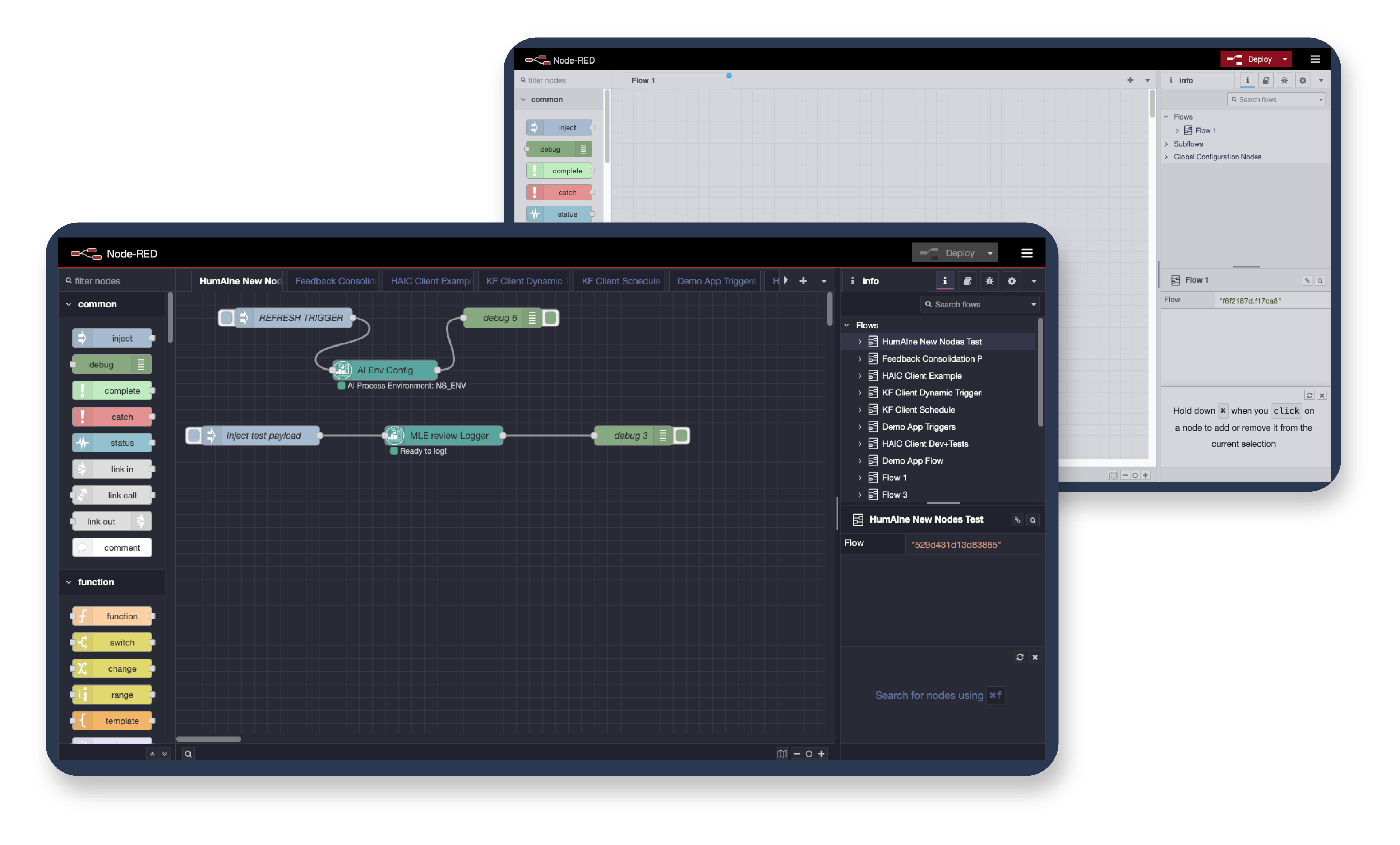
Node-RED lowers the technical barrier to develop AI workflows. These event-driven workflows are enhanced by RabbitMQ which enables communication between flows, tools and other services.
AI development
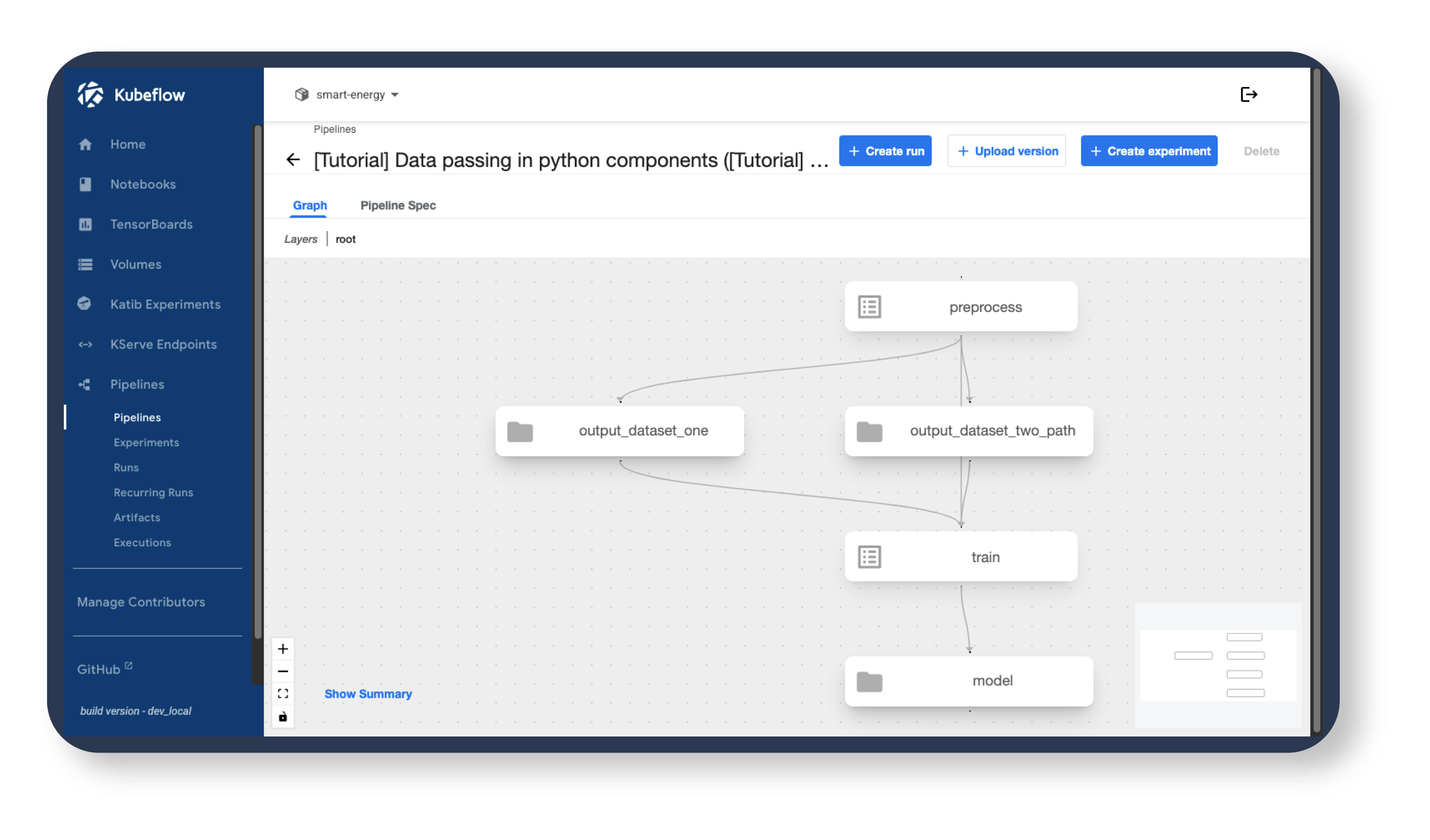
Kubeflow is the AI platform teams can build on top of by using each subproject independently or deploying the entire Kubeflow Community Distribution to meet their specific needs. Kubeflow does the heavy lifting of AI development with its pipelines and notebooks.
On demand AI Assistance
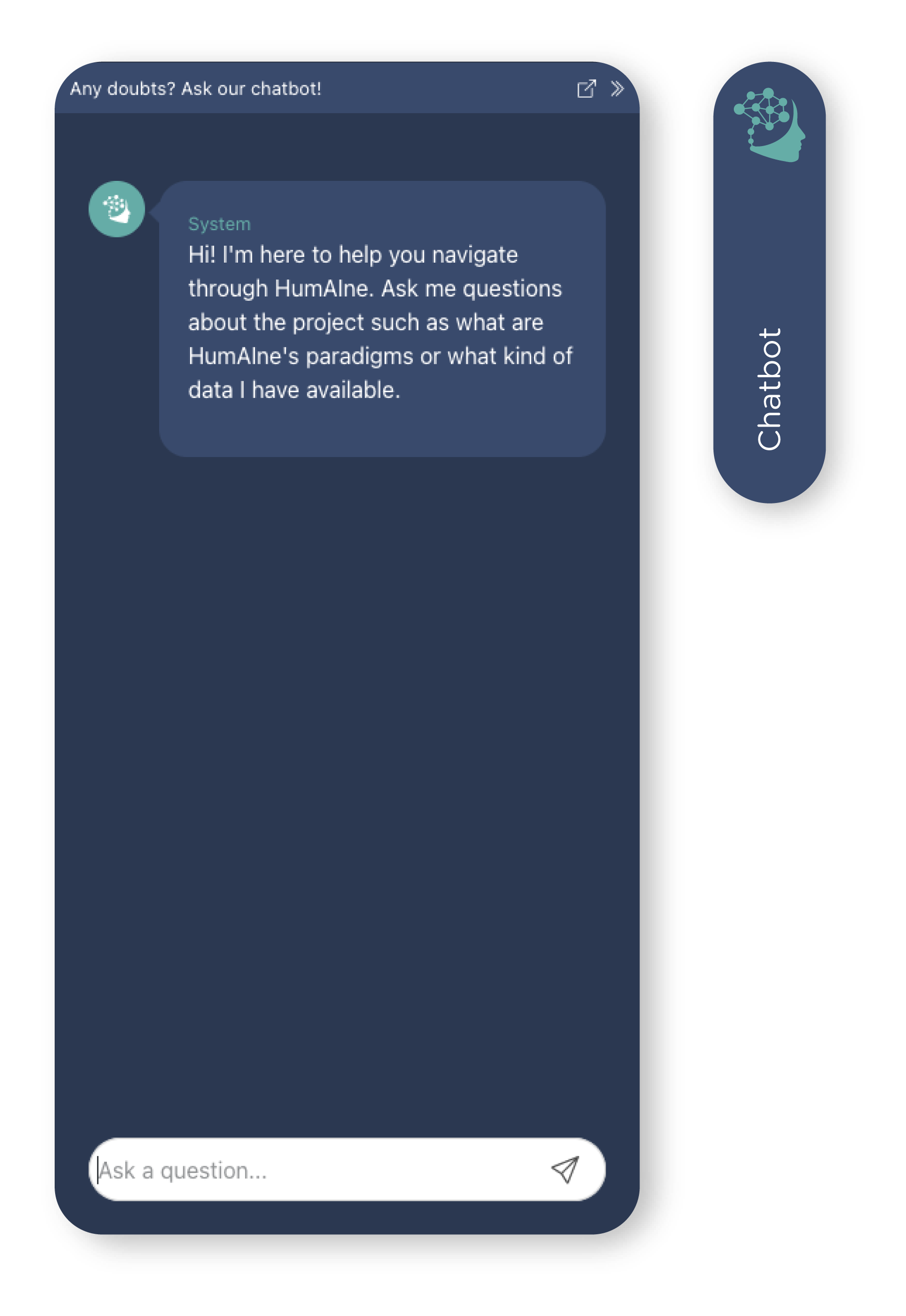
HumAIne's AI Chatbot is a helpful companion that can be used to get more information on HumAIne, the information stored in MinIO and on Kubeflow.
System-wide communication
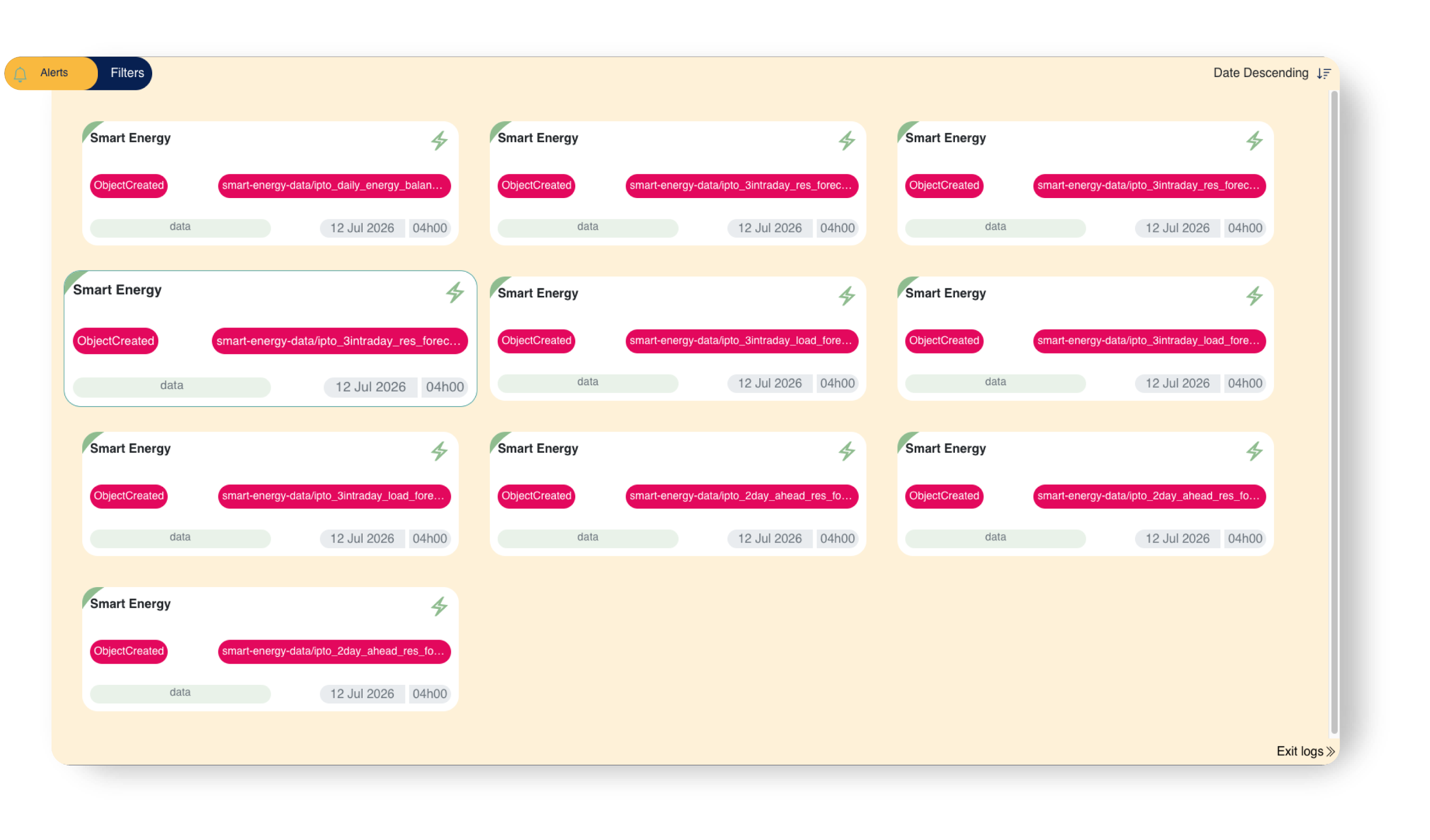
The RabbitMQ messaging system enables communication between different flows and keeps the Human operator in the loop as to events happening.
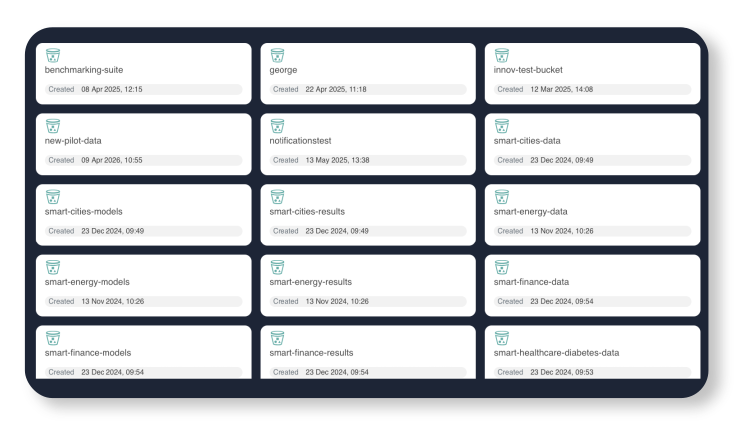
Permission aware S3 Compatible storage
MinIO serves as the platform's storage system to store flows, datasets and models. Sends automated messages to RabbitMQ to be used within workflows.
Go to our resources
These Resources describe the setup/instalation procedure for the HumAIne platform core components in a Kubernetes cluster.
HumAIne Platform
Advancing Human-AI Collaboration with a Next-Gen Operating System
The HumAIne project propels seamless collaboration between humans and AI systems for decision-making in dynamic, unstructured environments. Outperforming AI systems and humans that work in isolation.




 HumAIne Platform